An independent, open anatomy explorer
See the body one structure at a time.
SomaVista lets you rotate, select and isolate 330 anatomical structures — 203 individual bones and a selection of organs — taken from the openly licensed BodyParts3D models. Every structure is also described in plain text, so nothing depends on 3D graphics.
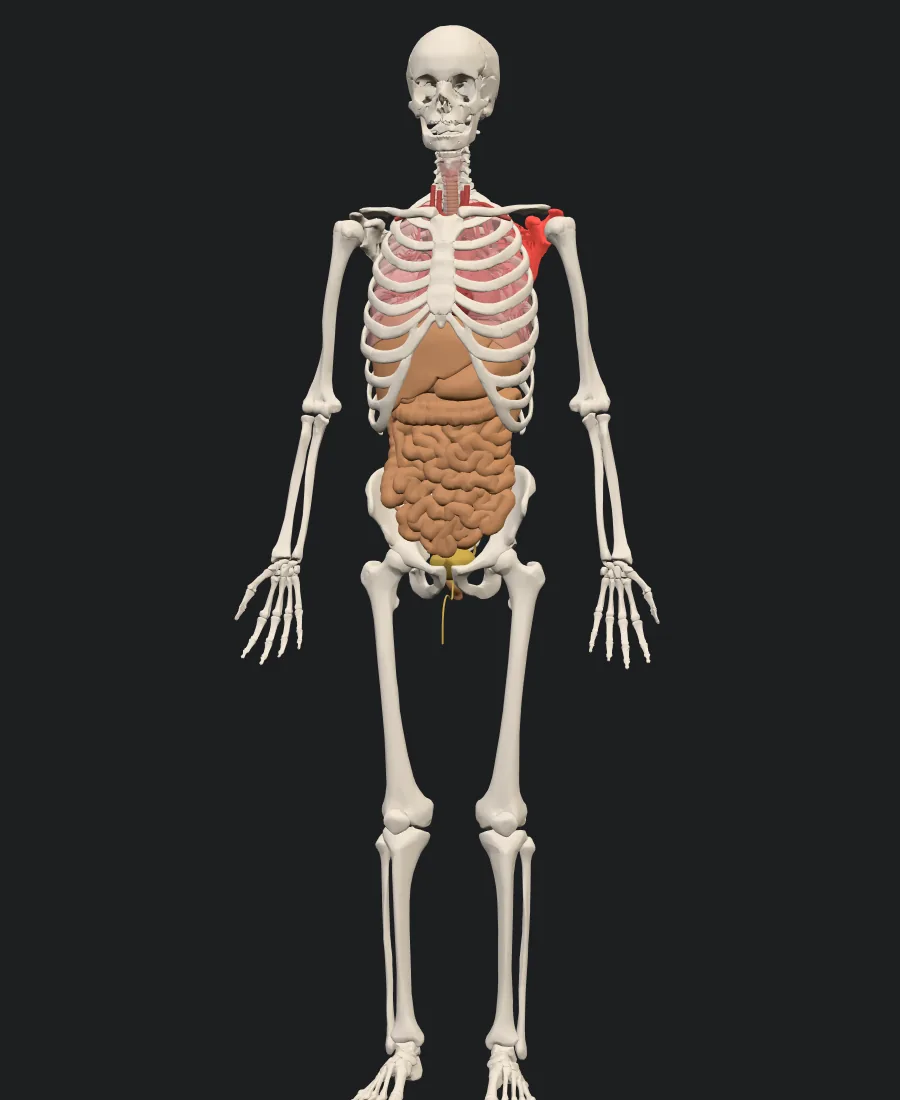
What the model includes
Six systems, loaded only when you switch them on. Counts are taken directly from the model files.
-
242
Skeletal
Individual bones of the skull, vertebral column (C1 to L5 and the sacrum), thoracic cage, shoulder and pelvic girdles, and both limbs down to the phalanges, plus costal cartilages and intervertebral discs. The coccyx and the middle-ear bones are not in the source data.
-
31
Heart & great vessels
The heart wall as a single mesh, the tricuspid, mitral and pulmonary valves, coronary arteries and cardiac veins, and the major vessels near the heart. Individual chambers, the aortic valve and the superior vena cava are not separate structures in the source data.
-
8
Respiratory
The five lung lobes (three right, two left), the trachea, the bronchial tree as a single mesh, and the thyroid cartilage of the larynx.
-
12
Digestive
Oesophagus, stomach, duodenum, jejunum, ileum, colon, appendix and rectum, with the liver, gallbladder, pancreas and pancreatic duct. The mouth, pharynx and spleen are not included in this release.
-
6
Urinary
Both kidneys, both ureters, the urinary bladder and the urethra.
-
31
Brain (selected)
Brainstem, cerebellum, ventricles, corpus callosum, thalamus, hippocampus, putamen, globus pallidus, amygdala, pituitary and pineal glands, optic nerves and chiasm. The cerebral cortex is deliberately left out: the source contains only scattered gyri, which would give a misleading picture of the brain.
How it works
Turn and zoom
Drag to rotate, scroll or pinch to zoom, and right-drag or use two fingers to pan. Arrow keys work too, and Reset returns to the starting view.
Select by tap or by name
Tap a structure in 3D, or search the list. The same item is highlighted in both places.
Isolate, hide and restore
Focus on one structure or region, hide what is in the way, then restore everything with one button. Each view has its own shareable link.
Learn and check yourself
Five short lessons with sourced explanations, and an identification quiz with answer explanations.
Scope and limitations
An honest description of what you are looking at.
- The models come from a single adult male body (BodyParts3D) and were simplified for the web, so fine surface detail is reduced.
- The heart is one surface; its chambers, the aortic valve and the superior vena cava are not separate structures.
- The cerebral cortex, muscles, skin, the coccyx and the middle-ear bones are not included.
- Descriptions are short educational summaries written for SomaVista and linked to further reading. They have not been reviewed by a clinician.
- No physiology, disease or treatment is simulated.